
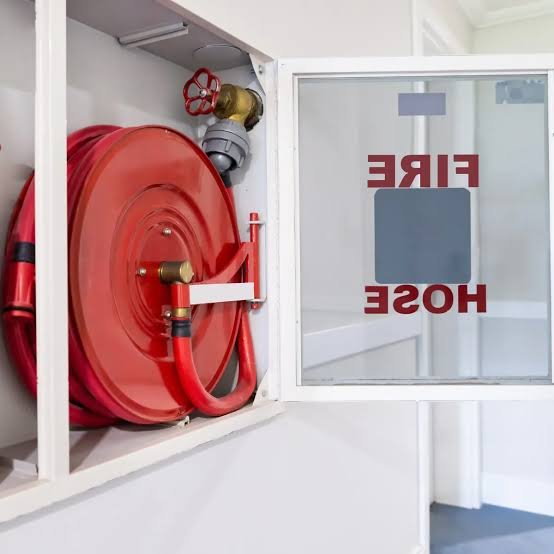
Fire safety is not limited to fire alarms and portable extinguishers. In many buildings, a properly designed fire hose reel system can provide another important means of responding to a developing fire. Hose reels are fixed firefighting equipment connected to a water supply, allowing water to be delivered through a flexible hose to the fire area.
For homes, offices, commercial buildings, warehouses, schools, hospitals, factories, hotels, and other premises, the suitability of a hose reel depends on the building’s design, occupancy, fire risks, water supply, and applicable requirements.
In Pakistan, fire protection should be considered as part of an overall building-safety strategy. The Pakistan Engineering Council lists the Building Code of Pakistan – Fire Safety Provisions 2016 among its building codes and standards. The National Disaster Management Authority also publishes fire-safety guidance and emphasizes maintaining firefighting equipment in working condition.
If you are unfamiliar with hose reels, the following ten points explain what they are, how they work, where they fit into a fire-safety plan, and why maintenance matters.
1. What Exactly Is a Fire Hose Reel?
A fire hose reel is a fixed firefighting device designed to provide a readily available supply of water for dealing with a fire in its early stages.
Unlike a portable fire extinguisher, which contains a limited quantity of extinguishing agent, a hose reel is connected to a water supply. This can allow water to be applied continuously while the system remains supplied and operational.
A typical hose reel installation may include:
- A reel or drum
- Flexible hose
- Nozzle
- Control or isolation valve
- Water-supply pipework
- Mounting arrangement
- Cabinet or protective enclosure where applicable
- Signage and operating instructions
The exact design varies according to the building and the system specification.
Hose reels are generally intended for initial firefighting, not for situations where a fire is already large, rapidly spreading, or producing dangerous smoke.
2. Hose Reels Are Different From Fire Extinguishers
Fire extinguishers and hose reels have different characteristics.
A portable extinguisher is designed to be picked up and carried to a small fire. Different extinguishers use different agents, such as water, foam, dry chemical powder, or carbon dioxide, depending on the hazard.
A hose reel normally provides water through a fixed connection.
This makes hose reels particularly relevant where a continuous water supply is part of the building’s fire-protection design.
However, water is not appropriate for every type of fire. For example, using water on energized electrical equipment or certain burning liquids can create additional danger.
This is why a building should have a properly assessed combination of fire-protection measures rather than relying on one piece of equipment.
3. Hose Reels Are Intended for Early-Stage Fires
One of the most important things to understand about a hose reel is its purpose.
A hose reel can be useful when a fire is still relatively small and a trained or appropriately instructed person can respond without placing themselves in danger.
It should never encourage someone to take unnecessary risks.
If flames are spreading rapidly, smoke is heavy, escape routes are threatened, or the person cannot confidently control the situation, evacuation should take priority.
A sensible emergency sequence is:
- Raise the alarm.
- Alert people nearby.
- Contact the appropriate emergency service.
- Evacuate if necessary.
- Only attempt initial firefighting if the fire is small, conditions are safe, and the person is appropriately trained.
Firefighting equipment is there to support life safety—not to encourage people to remain inside a dangerous building.
4. Location Is Extremely Important
A hose reel is only useful if people can reach it quickly.
It should therefore be installed in a suitable, accessible location based on the building’s fire-protection design.
Things that can make a hose reel difficult to use include:
- Stored boxes
- Furniture
- Vehicles
- Equipment
- Racking
- Temporary partitions
- Construction materials
- Locked access doors
- Poor signage
The Building Code of Pakistan provides requirements covering fire-protection systems, while specific installation details should be determined according to the approved design and applicable requirements for the building.
A hose reel should never be treated as a decorative fixture. Its accessibility should be checked regularly.
5. Water Supply Is Just as Important as the Hose
People sometimes focus on the hose and reel but forget the water supply behind the system.
A hose reel can only perform properly if its water supply, pipework, valves, and associated equipment are correctly designed and maintained.
Potential problems include:
- Insufficient water pressure
- Closed valves
- Leaking pipework
- Damaged hoses
- Blocked nozzles
- Faulty pumps
- Empty or inadequate water storage
- Corrosion
- Damaged connections
This is why hose reel systems should be designed and maintained by appropriately qualified professionals.
The National Disaster Management Authority has emphasized the importance of keeping firefighting equipment, including hoses and related equipment, in good working condition.
Simply installing a reel on the wall does not guarantee that it will work during an emergency.
6. A Hose Reel Should Not Be Used for Every Type of Fire
This point is particularly important.
Hose reels generally use water, so they are primarily appropriate for fires where water can be safely applied.
Water can be dangerous or ineffective for certain hazards, including some electrical and flammable-liquid fires.
For example, if electrical equipment is energized, applying water without appropriate controls can create an electrical shock hazard.
Similarly, some burning liquids can spread when water is incorrectly applied.
The appropriate firefighting equipment should therefore be determined by the hazards present in the building.
A professional fire-risk assessment can help determine whether hose reels, portable extinguishers, sprinklers, hydrants, or other systems are appropriate.
7. Regular Inspection and Maintenance Are Essential
Fire equipment can deteriorate even when it is never used.
A hose may develop damage, a valve may become difficult to operate, a nozzle may become blocked, or the water supply may develop a problem.
Regular inspection helps identify these issues before an emergency.
A basic visual inspection can look for:
- Damaged hose
- Cracks or cuts
- Corrosion
- Leaking connections
- Damaged nozzle
- Obstructed reel
- Missing signage
- Physical impact damage
- Problems with the cabinet
- Inaccessible equipment
More detailed testing should be carried out according to the system design, manufacturer instructions, applicable standards, and local requirements.
Pakistan’s fire-safety code framework includes inspection, testing, maintenance, and record-keeping provisions for fire-protection systems and equipment.
8. Fire Hose Reels Should Work Alongside Fire Alarm Systems
A hose reel is a firefighting device. A fire alarm is primarily an early-warning system. They perform different jobs.
A properly designed fire alarm system in Pakistan can help alert occupants when a fire is detected, while firefighting equipment can provide a means of responding to an early-stage fire.
These systems should therefore be viewed as complementary.
A typical building fire-safety strategy may involve:
- Fire detection
- Fire alarm notification
- Fire extinguishers
- Hose reels where appropriate
- Automatic sprinklers where required
- Hydrants or standpipe systems
- Emergency lighting
- Fire doors
- Clearly marked exits
- Evacuation procedures
- Staff training
The exact combination depends on the building.
For example, a small residential property may have very different fire-protection requirements from a hospital, shopping centre, warehouse, hotel, or high-rise office building.
9. Employees Should Know Where Hose Reels Are Located
Installing firefighting equipment is only part of the solution.
People working in the building should know where important safety equipment is located and what they are expected to do during a fire.
Training should cover:
- How to raise the alarm
- Where emergency exits are located
- Where hose reels are positioned
- Where fire extinguishers are located
- How to report a fire
- Where the assembly point is
- When evacuation takes priority
- Why people should not take unnecessary risks
Training should be appropriate to the employees’ responsibilities.
For larger buildings, emergency drills can help identify problems with evacuation routes, alarm audibility, staff coordination, and emergency procedures.
NDMA guidance also emphasizes fire-safety and emergency-response training as part of preparedness.
10. Never Ignore a Hose Reel That Looks Damaged
A damaged hose reel should not be treated as a minor maintenance issue.
Imagine a fire starts and an employee reaches for the reel, only to discover that:
- The hose is cracked.
- The nozzle is missing.
- The valve will not open.
- The hose cannot unwind.
- The water supply is unavailable.
- The reel has been blocked by stored goods.
At that point, the equipment may be unable to provide the protection it was intended to offer.
Any visible defect should be reported and addressed through the appropriate maintenance process.
Where a system is taken out of service for repair, the building’s responsible management should consider what temporary fire-safety measures are necessary until the system is restored.
Where Are Fire Hose Reels Commonly Used?
The suitability of hose reels depends on the building’s fire-risk assessment and applicable requirements, but they may be found in various types of premises, including:
Commercial Buildings
Offices, retail properties, shopping facilities, and other commercial premises may incorporate hose reels into their fire-protection arrangements.
Warehouses
Warehouses can contain substantial quantities of combustible materials. Fire-protection requirements need to consider storage type, height, layout, and the goods being stored.
Hotels
Hotels have sleeping occupants who may be unfamiliar with the building. Detection, alarm, evacuation, and firefighting arrangements therefore require careful planning.
Schools and Educational Buildings
Schools need fire-protection systems that account for large groups of occupants, evacuation routes, and staff responsibilities.
Industrial Facilities
Factories can have specialized hazards such as machinery, combustible materials, chemicals, electrical equipment, and hot-work processes.
Hospitals
Hospitals require particularly careful fire planning because some occupants may have limited mobility or may require assistance during evacuation.
These examples do not mean every building automatically requires the same type or number of hose reels. Fire-protection requirements must be determined based on the building and applicable regulations.
Fire Hose Reel Maintenance Checklist
A simple inspection checklist can help building managers identify obvious problems.
Visual Condition
- Is the hose intact?
- Is the nozzle present?
- Is the reel physically secure?
- Are there signs of corrosion?
- Is the cabinet or enclosure damaged?
- Are fittings visibly leaking?
Accessibility
- Is the hose reel easy to reach?
- Are there boxes or furniture blocking it?
- Is signage visible?
- Can the hose be deployed without obstruction?
Water Supply
- Are relevant valves in the correct condition?
- Is there any visible leakage?
- Has the water-supply system been professionally tested as required?
- Are pumps and associated equipment maintained where applicable?
Documentation
- Are inspections recorded?
- Are scheduled maintenance activities up to date?
- Have identified defects been corrected?
- Is there documentation for professional testing?
The inspection frequency should follow the applicable maintenance program, manufacturer’s requirements, approved system design, and local authority expectations.
Common Fire Hose Reel Mistakes
Using a Hose Reel Without Training
People may assume that because a hose reel looks simple, anyone can use it safely. That is not necessarily true.
Workers should receive suitable instruction and understand when evacuation is safer than firefighting.
Blocking the Reel
A hose reel hidden behind boxes is effectively unavailable when needed.
Ignoring Leaks
A small leak may indicate a larger maintenance problem.
Assuming Water Works on Every Fire
Water is not suitable for every fire type. The hazard must be identified before selecting firefighting equipment.
Failing to Test the System
A hose reel that has never been tested cannot be assumed to work properly during an emergency.
Treating Fire Equipment as Decoration
Fire equipment should remain visible, accessible, and ready for use.
Fire Hose Reels and Overall Building Fire Safety
It is useful to think about fire protection as a chain.
Detection → Alarm → Evacuation → Firefighting → Emergency Response
A fire alarm can provide early warning. An evacuation plan helps people leave. Fire extinguishers and hose reels may help deal with an early-stage fire when conditions are safe. Fire departments and other emergency services provide professional response when an incident goes beyond the capabilities of occupants.
If one part of this chain is neglected, the overall response can become less effective.
This is why installing a hose reel alone does not make a building fire-safe.
The building needs a coordinated fire-safety plan that considers prevention, detection, suppression, evacuation, maintenance, and training.
Fire Safety in Pakistan: What Building Owners Should Consider
Building owners and managers in Pakistan should consider the requirements that apply to their particular building, occupancy, location, and use.
The Pakistan Engineering Council identifies the Building Code of Pakistan – Fire Safety Provisions 2016 as an official building-code document.
The code addresses a broad range of fire-safety subjects, including fire protection systems, life safety, emergency operations, and maintenance considerations.
NDMA also currently lists Urban Fire Safety Guidelines among its official guidance materials.
For larger or more complex buildings, owners should work with qualified fire-safety professionals and follow the requirements of the relevant authority having jurisdiction.
Final Thoughts
Fire hose reels can be an important component of a building’s firefighting arrangements when they are correctly designed, installed, maintained, and used for appropriate fire risks.
The ten most important points to remember are:
- A hose reel is fixed firefighting equipment connected to a water supply.
- It is generally intended for early-stage fire response.
- It is different from a portable fire extinguisher.
- Water is not suitable for every type of fire.
- Accessibility is essential.
- The water supply and associated equipment must work properly.
- Regular inspection and maintenance are necessary.
- Employees should understand basic emergency procedures.
- Hose reels should complement, not replace, alarms and other fire-protection measures.
- Any damaged or inaccessible equipment should be addressed promptly.
A properly maintained fire alarm system in Pakistan, combined with suitable firefighting equipment, clear escape routes, emergency planning, and regular training, can create a much stronger overall fire-safety strategy.
For more information about fire-safety equipment and solutions, you can explore Flame Defender.
FAQs
1. What is the main purpose of a fire hose reel?
A fire hose reel provides a fixed supply of water that can be used to tackle an appropriate fire during its early stages, provided conditions are safe and the person using it is appropriately trained.
2. Can a fire hose reel be used on an electrical fire?
Generally, water should not be applied to energized electrical equipment because of the risk of electric shock. The appropriate extinguisher or firefighting method depends on the specific hazard and circumstances.
3. How often should a fire hose reel be inspected?
Inspection and testing frequency depends on the system design, manufacturer instructions, applicable standards, and local requirements. Regular visual checks should be supplemented by scheduled professional maintenance where required.
4. Is a hose reel better than a fire extinguisher?
Neither is universally “better.” They serve different purposes. Extinguishers are portable and available in different extinguishing agents, while hose reels can provide a continuous water supply for suitable fires. A building may need both depending on its risk assessment.
5. Is a fire hose reel enough to protect a building from fire?
No. A hose reel is only one component of a comprehensive fire-safety strategy. Depending on the building, protection may also involve a fire alarm system, extinguishers, sprinklers, hydrants, emergency lighting, fire doors, evacuation procedures, staff training, and regular maintenance.